
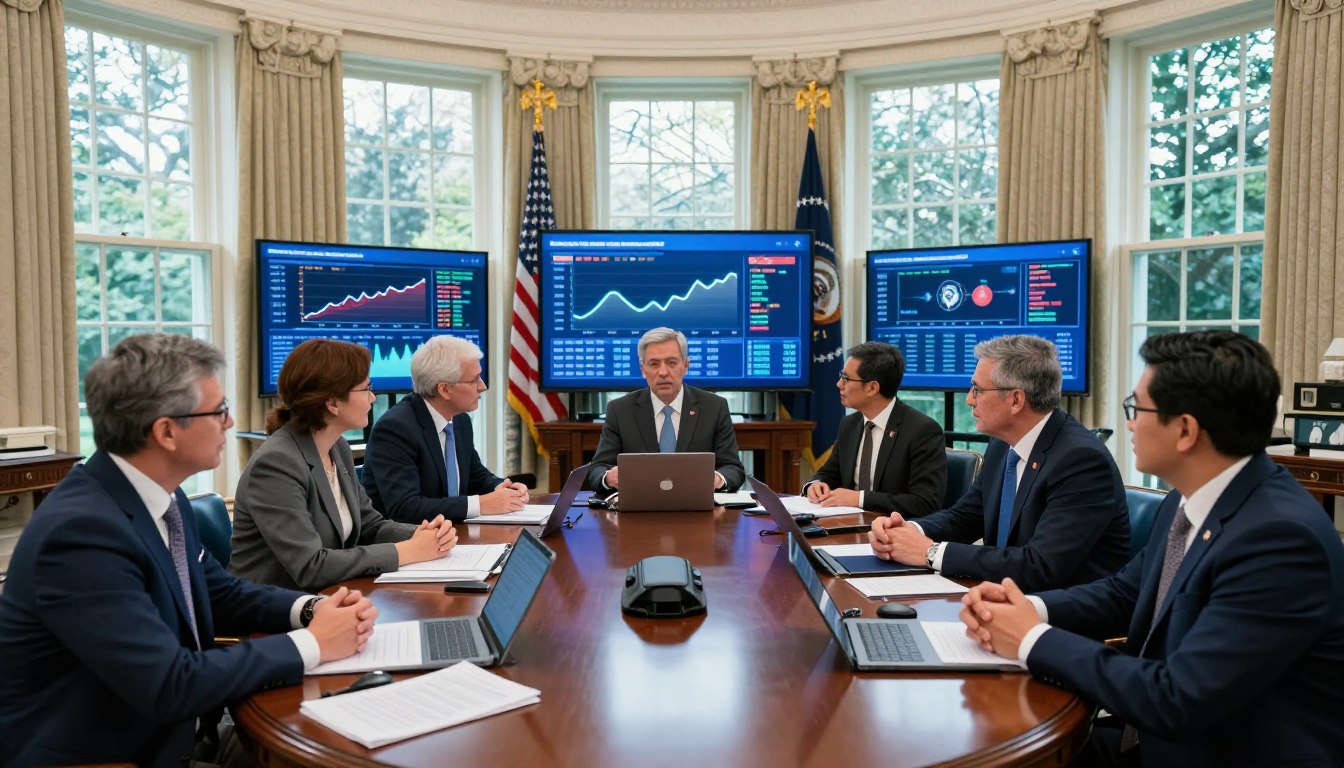

Donald Trump’s White House crypto summit is a past event, not a meeting still to come. Its significance lies in the administration’s approach to U.S. policy, not in any promise about crypto prices.
For companies and investors, the key question is how that policy direction could become practical rules. The summit brought regulators and industry figures together, while legislation and agency rulemaking remain separate paths for setting requirements.
Tokenization means representing an asset or rights to an asset as digital tokens on a blockchain. Understanding that idea helps explain why lawmakers and regulators are discussing how digital assets fit existing market rules.
Key Takeaways
- The summit has already taken place.
- Its significance is policy direction, not a price signal.
- The CLARITY Act remains a separate congressional question.
- The SEC and CFTC can act within existing powers.
- Agency rules and congressional legislation follow different routes.
The meeting matters as a policy signal, while the bill and agency rules determine what changes in practice.
When Is Trump’s Crypto Summit?
The summit took place on August 19, 2026, at the Eisenhower Executive Office Building in Washington, D.C. The building sits adjacent to the main White House building, and the event was a completed meeting, not a date still on the calendar.
August 19, 2026, is the date of the meeting. It brought administration officials and people from finance and crypto together to discuss policy questions. The venue is a separate federal building beside the main White House, rather than the White House residence itself.
The August 19 meeting is complete; no future date belongs to that event.
That distinction matters because later developments involve Congress and federal agencies, not a rescheduled version of the summit. A policy discussion can draw attention to an issue, but it does not by itself change the rules companies must follow.
Readers checking for a future date should distinguish this completed meeting from later congressional and agency developments.
Who Took Part, and What Was on the Agenda?
Roughly two dozen people attended, with crypto firms, traditional financial institutions, and federal regulators represented. The mix made the agenda broader than a discussion among crypto executives alone.
The executives and institutions in the room
Participating executives and officials included Brian Armstrong of Coinbase, Brad Garlinghouse of Ripple, and Vlad Tenev of Robinhood. SEC Chair Paul Atkins and CFTC Chair Mike Selig also took part in the meeting.
Organizations invited or represented included Coinbase, Ripple, Gemini, a16z, Paradigm, Chainlink, Nasdaq, NYSE, CME Group, and DTCC. That list identifies organizations involved in the gathering, not a confirmed individual attendee for every organization.
Tokenization is the representation of an asset or rights to an asset as digital tokens on a blockchain. It was relevant to both crypto companies and traditional financial firms exploring how digital assets could fit into existing markets.
The policy questions on the agenda
Donald Trump urged a framework that would let crypto companies operate in the United States. The meeting’s stated policy topics included:
- Tokenization and how tokenized assets fit market rules.
- Crypto market structure and the roles of federal regulators.
- Prediction markets and questions about regulatory jurisdiction.
The agenda connected the treatment of digital assets with the rules governing the markets where they are offered or traded. Tokenization and market structure placed the meeting’s emphasis on the rules for assets and markets, not on a price target.
How Did the 2026 Meeting Differ From the 2025 Summit?
The March 2025 roundtable centered on high-profile administration announcements, while the later meeting focused more on regulatory questions. The first presidential-level crypto roundtable took place on March 7, 2025, in the White House State Dining Room.
Brian Armstrong, Michael Saylor, the Winklevoss twins, Sergey Nazarov, Vlad Tenev, and Zach Witkoff attended the March roundtable. Its announcements and messages included three distinct actions:
- Announcing a Strategic Bitcoin Reserve of approximately 200,000 BTC, all from law-enforcement seizures, with a pledge that the government would not sell its Bitcoin.
- Declaring an end to Operation Chokepoint 2.0.
- Urging Congress to pass stablecoin legislation before the August recess.
The reserve announcement put government-held Bitcoin in the spotlight. The later meeting instead dealt more directly with how digital assets, financial firms, and markets should be governed.
That difference reflects a shift from headline policy signals toward questions about oversight, enforcement, and the rules companies may face. The issues also moved from reserve policy and stablecoins toward market structure and regulatory jurisdiction.
The change in emphasis is from signaling support for crypto toward defining how its markets will be governed.
What Is the CLARITY Act, and Why Did It Stall?
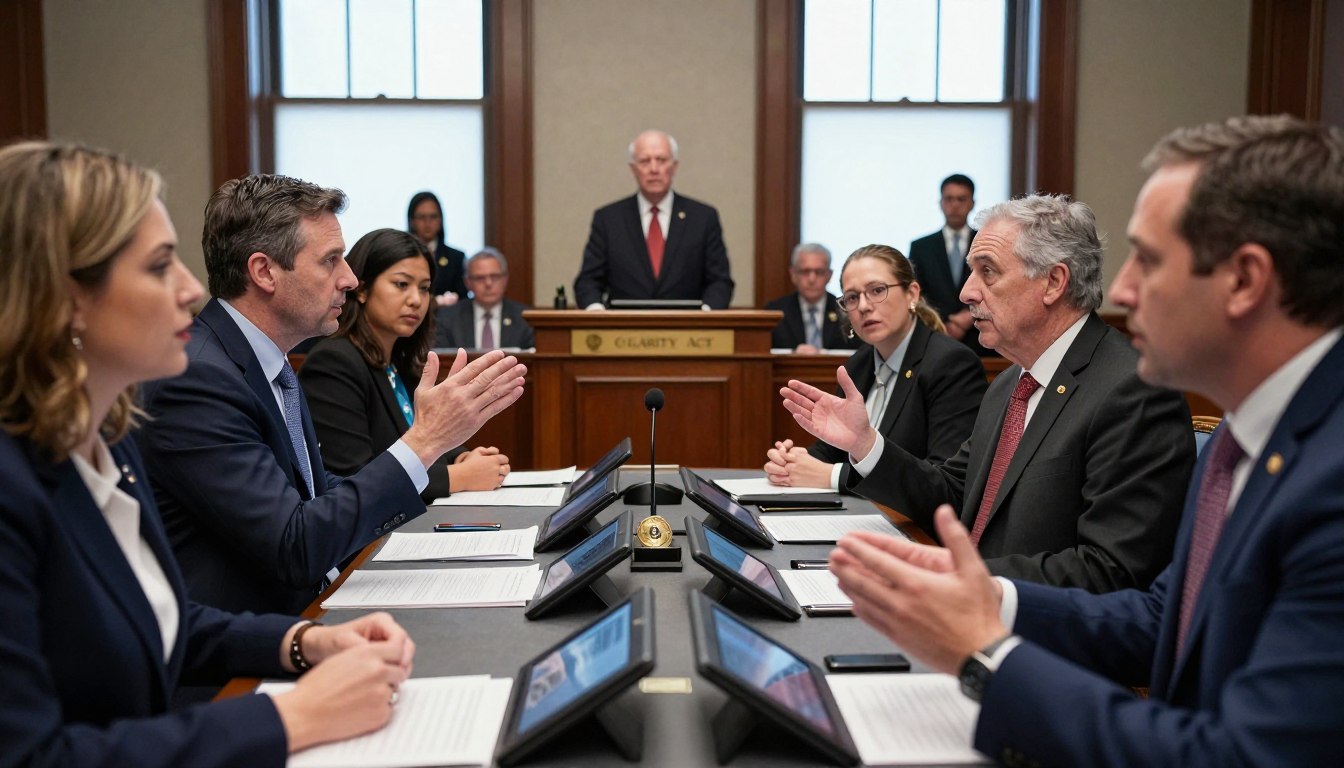
The CLARITY Act would draw a federal line between digital commodities overseen primarily by the CFTC and digital securities overseen by the SEC. The proposed division is central to the bill’s effort to create a clearer framework for digital assets.
The bill’s proposed division of oversight
The proposal gives the CFTC primary responsibility for digital commodities and their spot markets. The SEC would retain authority over digital securities and certain primary-market transactions.
A statute could give firms a durable framework for deciding how to operate and which regulator’s requirements apply. Without one, companies must assess existing laws and agency actions as they develop their businesses.
The votes and disputes holding it back
The House passed H.R. 3633 on July 17, 2025, by a vote of 294-134. On September 15, 2026, the Senate failed to advance it in a 49-50 procedural vote, below the 60 votes needed to proceed.
Senate Majority Leader John Thune’s chamber needed enough support to clear that procedural threshold. The setback left negotiations exposed to disputes over ethics, stablecoin returns, and the reach of rules for decentralized finance.
| Issue | Dispute | Why it matters to negotiations |
|---|---|---|
| Government ethics and officials’ crypto interests | Whether the bill should address officials’ financial interests in crypto | Ethics provisions can affect support for the bill |
| Stablecoin yields | Whether yields could resemble deposit-like returns | Different views shape stablecoin rules |
| DeFi, Section 604, sanctions, and anti-money-laundering rules | How compliance duties apply to decentralized finance | The scope of duties affects DeFi activity |
After the setback, passage during the 119th Congress was widely viewed as unlikely, with the Senate calendar shortened before the November 2026 midterm elections. The 49-50 vote did not enact the bill, and the 60-vote threshold left it dependent on bipartisan support.
How Can Regulators Act While Congress Debates?
Congress is not the only route for shaping crypto rules, because the SEC and CFTC can use powers they already have. Agency rulemaking can move forward under existing statutes, though its reach is limited by those laws.
SEC proposals and public input
The SEC can propose rules within its existing authority and invite public comment. Comments give the agency a formal way to receive views on a proposal before it decides whether to adopt a final rule.
In 2026, the SEC proposed Regulation Crypto Assets, with a public-comment deadline of October 20. That deadline has passed, leaving subsequent agency action as a separate step from the public input period.
CFTC rulemaking under existing authority
On September 17, 2026, the CFTC submitted a crypto asset rulemaking to the Office of Information and Regulatory Affairs for review. That submission began a review step; it did not put a final rule into effect.
Rulemaking can proceed without new legislation when an agency acts within its current statutory authority. The two agencies can also issue guidance, but neither agency’s rules nor guidance are the same as a statute passed by Congress.
| Policy route | Who acts | How it works |
|---|---|---|
| Congressional legislation | Congress | Passes a statute that establishes legal requirements |
| SEC rulemaking | SEC | Proposes rules within existing authority and considers public comments |
| CFTC rulemaking | CFTC | Develops rules under existing authority and follows agency review |
Agency rules can shape how crypto assets are regulated, but they operate within the authority Congress has granted. A rulemaking submission is a step in the process, not proof that a final rule is already in effect.
Why Were Prediction Markets at the White House?
Kalshi and Polymarket were invited because their platforms raise questions about which regulators have authority over prediction markets. The issue involves jurisdiction, including the line between federal derivatives oversight and state gambling laws.
Kalshi and Polymarket’s regulatory questions
Kalshi is a CFTC-regulated event-contract platform. Polymarket is a decentralized prediction market, and its structure raises questions about how federal oversight applies alongside state laws.
The central question is how federal derivatives rules interact with state gambling laws. Prediction markets let users trade contracts tied to future events, so regulators may need to consider both the contracts and the way platforms operate.
The CFTC committee meeting the next day
The CFTC Innovation Advisory Committee held its inaugural meeting on August 20, 2026, the day after the summit. It ran from 1:00 PM to 4:00 PM and included three 50-minute panels.
The panels addressed crypto assets, AI in trading compliance, and prediction markets and federal-state jurisdiction. Those topics brought together questions about new technology, compliance practices, and which level of government may oversee particular markets.
The committee can offer advice to the CFTC, but that advice is non-binding. Its discussion may inform regulators’ work without settling the legal boundaries between federal derivatives oversight and state gambling laws.
The committee’s advice can inform the CFTC, but it does not itself create binding rules.
What Comes Next for U.S. Crypto Policy?
The summit has passed, so the useful next step is to follow policy actions and treat market-cycle talk as speculation. The SEC’s proposed Regulation Crypto Assets had an October 20, 2026, public-comment deadline, which has passed.
Three separate watchpoints help distinguish policy steps from market expectations:
- Follow subsequent SEC and CFTC action after the comment period; no later White House summit is scheduled here.
- Some investors watched for a possible November 2026 bear-market bottom under Bitcoin’s roughly four-year cycle thesis, but Fidelity cautioned that the cycle is not guaranteed to repeat.
- Bitcoin 2027 is scheduled for July 15-17, 2027, at Music City Center in Nashville, Tennessee. It is a separate industry conference.
The cycle view is an investment theory, not a reliable timetable for crypto prices. Bitcoin 2027 is a scheduled industry event, not evidence that another White House summit has been called.
Conclusion
The August meeting signaled policy direction, but it did not settle the rules for U.S. crypto markets. The CLARITY Act and agency action remain separate routes for determining what companies must do.
For firms, the distinction affects whether a change comes from a statute or from a regulator acting under existing authority. Neither a summit discussion nor investor expectations substitute for a binding legal change.
A practical next step is to check congressional scheduling and agency notices separately. Track congressional developments and agency notices separately, since they follow different routes.
FAQ
Will the Clarity Act be passed?
Passage during the 119th Congress was widely viewed as unlikely as of October 29, 2026, but the bill was not definitively dead. Its Senate procedural vote fell short of the threshold to proceed, and the calendar had narrowed before the November midterm elections. Any remaining path depends on further congressional action and enough support to move the bill forward.
Will we see a crypto bull run in 2026?
No summit or agency rulemaking guarantees a crypto bull run in 2026. Some investors watched for a possible November bottom under Bitcoin’s roughly four-year cycle thesis, but that view is uncertain. Fidelity cautioned that the cycle is not guaranteed to repeat, and market prices can move for reasons unrelated to policy meetings.
What are the upcoming crypto events in 2026?
No new White House crypto summit is scheduled in the developments discussed here. The summit-related dated milestones have passed, while agency work can continue through proposals, public input, review, and later action. Those steps are regulatory activity, not necessarily a single event with a public meeting date. Bitcoin 2027 is scheduled for July 2027, outside 2026.
Why does Congress still matter if agencies can set crypto rules?
Congress matters because legislation can establish a statutory framework that agencies cannot create on their own. The SEC and CFTC can act within powers existing laws already give them, including through rulemaking. Those actions can shape requirements, but agency rules remain different from a law passed by Congress and are bounded by statutory authority.
Does the White House summit itself create binding crypto rules?
No, the White House summit itself did not create binding crypto rules. The meeting was a policy discussion, not a statute or a formal agency action. Binding changes require legislation or formal action by an agency acting within its legal authority. A meeting can signal priorities, but companies must look to enacted laws and applicable agency rules for requirements.
If you want to dig further into what to look for when trading cryptocurrency, read our What to Look for When Trading Cryptocurrency guide.
If you want to dig further into computer hardware, read our Computer Hardware guide.
If you want to dig further into how to connect printer to computer via networ, read our How to Connect Printer to Computer via Networ guide.


 By

 By